America And Iran Fight For Control Of The Strait Of Hormuz
The Squeeze Is Working, Which Is Why This Is The Worst Moment To Ease It
Both sides closed the strait expecting to outlast the other. Six months on, the oil revenue is drying up on one side of it and not the other, and the case for buying a ceasefire has never been weaker.
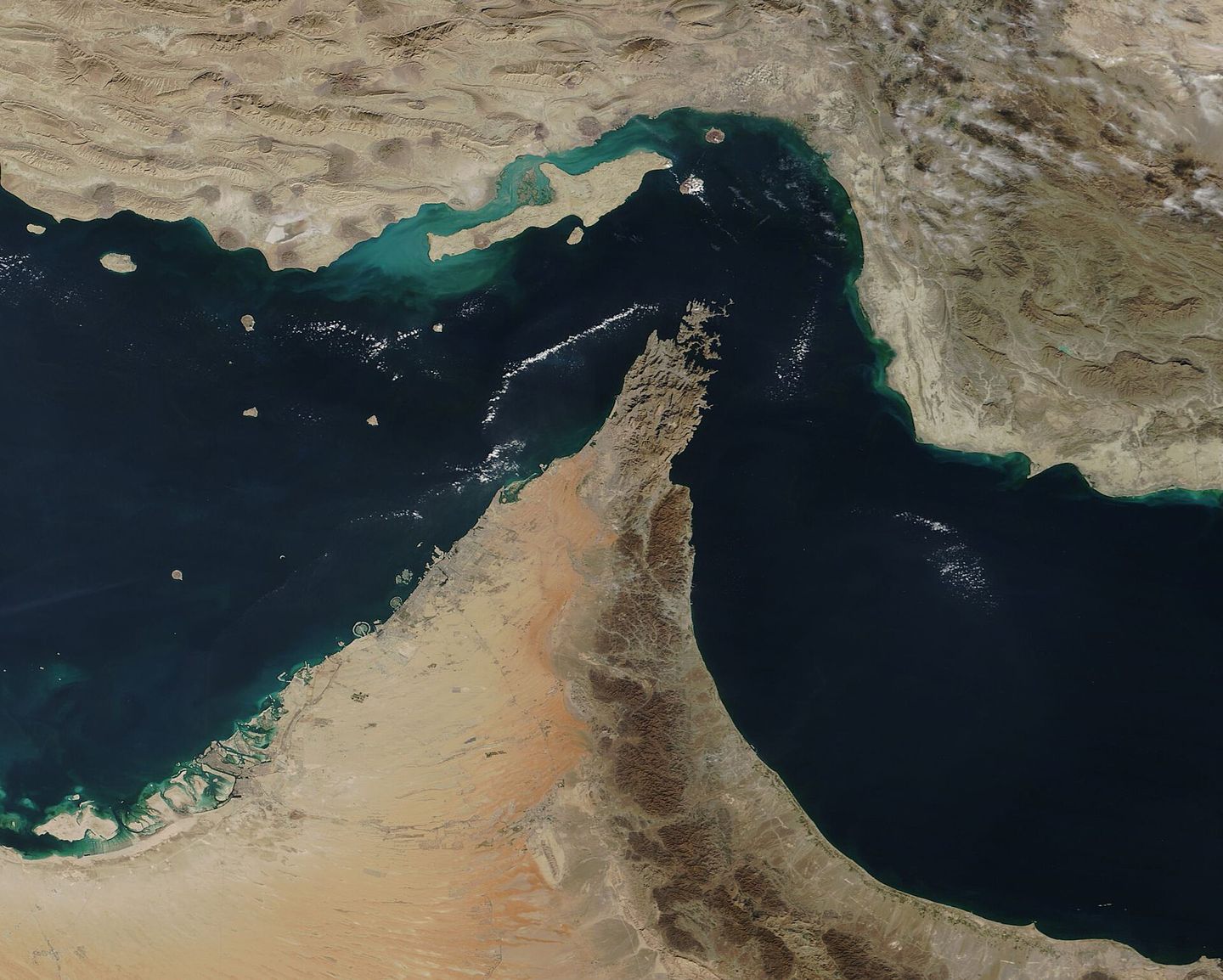
Start with the strategic fact rather than the day's headline. "By squeezing the Strait of Hormuz," writes Yaroslav Trofimov, "both the U.S. and Iran expected to outlast their foe, believing time would work in their favor. Now, it looks like the trend is moving against Tehran." The mechanism is unglamorous and it is working: American escorts are moving Gulf crude out while Iranian cargoes are stopped, so the same closed waterway that costs the world a premium costs Iran its only convertible income.
That is the answer to the argument that the pressure has failed because Tehran is still shooting. Of course it is still shooting. A government whose oil dollars are drying up and whose grip on the strait is loosening has every reason to make the loudest noise it can, and the September salvo — ballistic missiles at a carrier and a destroyer, both of which evaded them — is the noise of a side that cannot reach what it is aiming at. Five of its shadow-fleet tankers were destroyed the following day. That exchange rate is not in Iran's favour and Iran knows it.
A regime that has to announce a toll booth to prove it still controls a strait has already told you who is winning.
The temptation now is entirely political and it should be named. Early voting begins in some states in October, petrol is expensive, and a president who could announce an end to the war would change the trajectory of the midterms. Dan McLaughlin puts the difficulty plainly: it is the one large rabbit still in the hat, but "the practical realities of the Iran war are unlikely to cooperate". A deal signed to fit an electoral calendar is a deal Tehran will read exactly as it read the June memorandum, which it broke in three weeks.
None of which requires pretending the war has gone well. The Spectator's leader calls the memorandum the latest in a series of humiliations and predicts a shellacking in November, and a serious person on this side can hold both thoughts: that the war was begun on a worse plan than its authors admitted, and that the moment when the other side's revenues are finally collapsing is the moment least suited to relief. The mistake was not the pressure. The mistake was the two ceasefires that lifted it.
Start with the strategic fact rather than the day's headline. "By squeezing the Strait of Hormuz," writes Yaroslav Trofimov, "both the U.S. and Iran expected to outlast their foe, believing time would work in their favor. Now, it looks like the trend is moving against Tehran." The mechanism is unglamorous and it is working: American escorts are moving Gulf crude out of the region while Iranian cargoes are stopped inside it, so the same closed waterway that costs the world a risk premium costs Iran the whole of its convertible income. A blockade that hurts both sides is still a blockade one side can afford.
That is the answer to the argument that the pressure has failed because Tehran is still shooting. Of course it is still shooting. A government whose oil dollars are drying up and whose grip on the strait is loosening has every reason to make the loudest noise available to it, and the September salvo is the noise of a side that cannot reach what it aims at. On Saturday the Revolutionary Guard fired ballistic missiles at an aircraft carrier and a guided-missile destroyer; both evaded. On Tuesday it tried again on a warship; Central Command reported that the vessel "successfully evaded the attempted Iranian attacks and continued to patrol regional waters. No American personnel were harmed." Five shadow-fleet tankers were destroyed in reply. That exchange rate is not in Iran's favour, and Iran can count.
A regime that has to announce a toll booth to prove it still controls a strait has already told you who is winning.
The temptation now is entirely political and it should be named rather than deplored. Early voting begins in some states in October, petrol is dear, and a president able to announce an end to the war would change the trajectory of the midterms nationally. Dan McLaughlin puts the difficulty plainly: it is the one large rabbit still in the hat, but "the practical realities of the Iran war are unlikely to cooperate". A deal signed to fit an electoral calendar is a deal Tehran will read exactly as it read the June memorandum, which lasted three weeks before Iranian attacks on commercial vessels ended it. Two ceasefires have now been tried on this government. Both were spent rebuilding.
The strongest objection comes from this side of the argument, not the other, and it deserves a straight answer. Matthew Petti's charge in Reason is that the same pundits who promised a swift and successful Iraq promised a swift and successful Iran, ignored the evidence when it did not arrive, and are now proposing to double the stake. He is right about the predictions and right that they were made loudly. But the conclusion does not follow. The claim being made here is not that Iran will collapse at the next push; it is that its revenue is finite, that the blockade is what makes it finite, and that this has now been demonstrated over six months rather than asserted over six weeks. Iraq's error was believing a war would be short. The error on offer today is believing that a long one can be ended by paying the other side to stop.
None of which requires pretending the war has gone well. The Spectator's leading article calls the memorandum the latest in a series of humiliations visited on the republic and forecasts a shellacking in November. A serious person on this side can hold both thoughts at once: that the war was begun on a worse plan than its authors admitted, and that the moment when the adversary's revenues are finally collapsing is the moment least suited to relief. The mistake was never the pressure. The mistake was the two ceasefires that lifted it while the machinery to rebuild was still intact.
What follows practically is dull and unpopular: no sweeteners, no early unfreezing, escorts maintained, the sanctions on the aviation and shipping networks kept and extended, and the Gulf's export capacity supported so that a hundred-dollar barrel becomes a ninety-dollar one without anything being conceded to get there. That is a policy a party can defend in November — not because it is cheap, but because the alternative is a third agreement with a government that has broken two, and the certainty of doing all of this again in eighteen months with a rebuilt adversary.