On 1 September an American missile struck a house in Kuhestak, a fishing town on the Strait of Hormuz, where several dozen people had gathered for the wedding of a fisherman's daughter. At least four were killed, among them four-year-old Amirali Karimi and sixteen-year-old Mohammad Mallahi, and more than sixty were wounded. As Medea Benjamin reports, the bomb struck the part of the celebration set aside for the women, which is why most of the injured are women and children. Iran's Red Crescent has asked the International Criminal Court to investigate.
The official response was to dispute the count and move on. The vice president says he would not call this a war; Responsible Statecraft's tally of the Pentagon's own casualty base gives 794 American service members wounded and 18 killed since 28 February, with 377 of the injuries since July alone and 36 in a single fortnight. The Pentagon files the ones before the July ceasefire under one operation name and the ones after it under another, which Kelley Beaucar Vlahos calls what it is: a distinction without a difference.
Calling it an operation is not a description. It is a filing decision, and its purpose is that no total ever has to be spoken aloud.
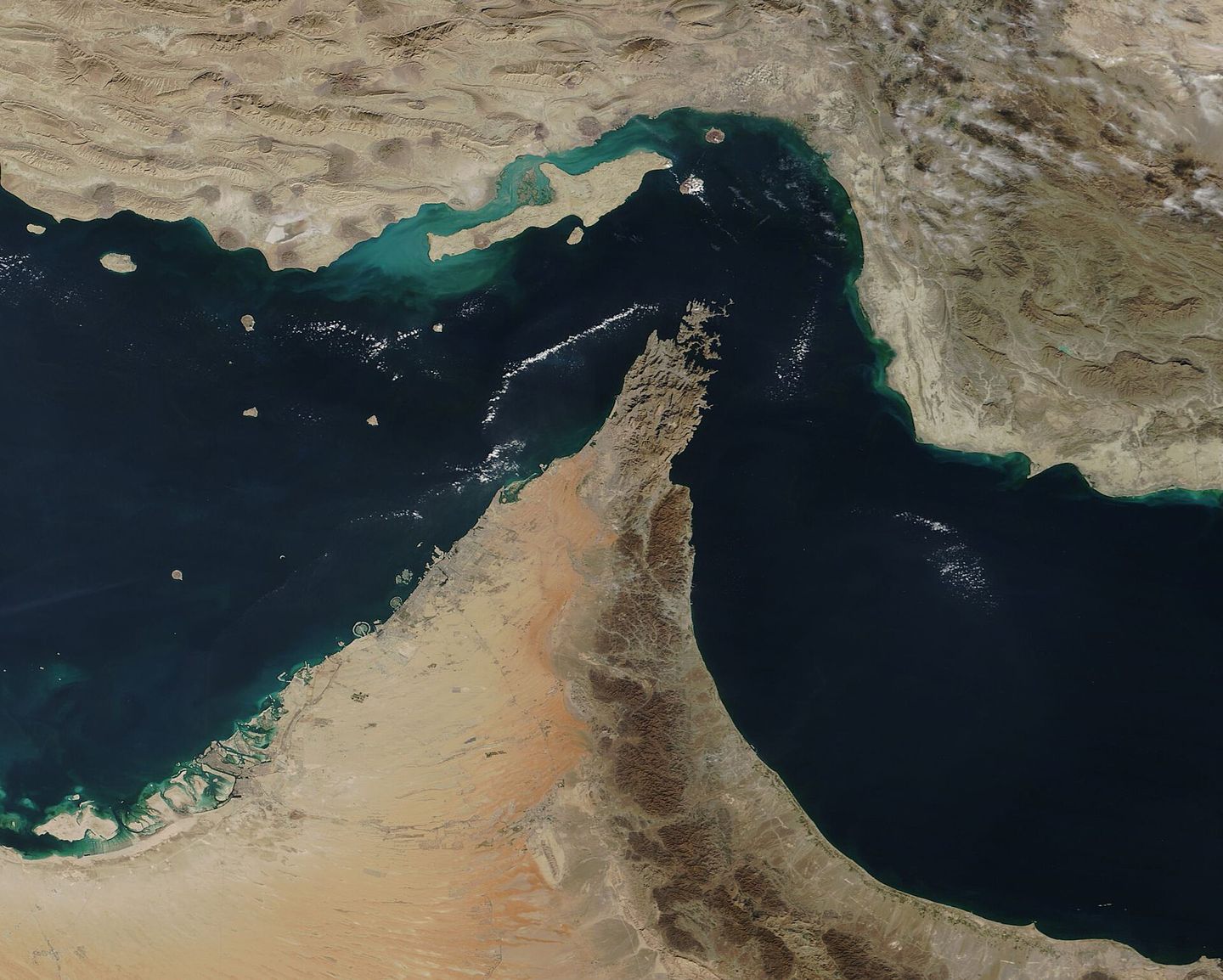
Underneath the language is an oil war, and the map says so plainly. Everything that has happened this week happened within a hundred miles of a chokepoint carrying a fifth of the world's crude: a blockade line, a restricted zone, five tankers destroyed, an exclusion zone extended into the Arabian Sea. The stated objective changes — non-proliferation, then deterrence, then, since July, regime change again — while the coordinates do not.
The bill is being paid twice over. Americans pay it at the pump and, according to Truthout, out of the National Institutes of Health budget; Iranians pay it in the ruins of Kuhestak; and the Gulf pays it in a seven per cent contraction in Qatar and in ports that have become targets. What is not being paid is any political price, because the Democratic opposition has spent six months arguing about the war's conduct and not its existence. That is the vacancy this leaves, and it is the one worth filling.
On 1 September an American missile struck a house in Kuhestak, a fishing town on the Strait of Hormuz in Sirik County, where several dozen people had gathered for the wedding of a fisherman's daughter. At least four were killed, among them four-year-old Amirali Karimi and sixteen-year-old Mohammad Mallahi, and more than sixty were wounded. As Medea Benjamin reports, video from the scene showed a hole in the roof, walls punctured, ceilings collapsed and children's shoes among the debris; the bomb struck the part of the celebration set aside for the women, which is why most of the injured are women and children. The wounded were taken to hospital in Minab, the same city where an elementary school was bombed on the first day of the war. Iran's Red Crescent has asked the International Criminal Court to investigate.
The official response was to dispute the count and move on. The vice president told a press briefing he would not call this a war. Meanwhile Responsible Statecraft's reading of the Pentagon's own casualty base gives 794 American service members wounded and 18 killed since 28 February, with 377 of the injuries since July alone and 36 in the fortnight to 5 September. The department files the casualties from before the July ceasefire under one operation name and those after it under another, which Kelley Beaucar Vlahos calls what it is: a distinction without a difference. For the people in the casualty base, the semantics are meaningless.
Calling it an operation is not a description. It is a filing decision, and its purpose is that no total ever has to be spoken aloud.
Underneath the language is an oil war, and the map says so more plainly than any statement of objectives. Everything that has happened this week has happened within a hundred miles of a chokepoint carrying a fifth of the world's crude: an American blockade line, an Iranian restricted zone, five tankers destroyed off Kharg Island and Jask, an exclusion zone extended into the Gulf of Oman and the Arabian Sea, prize law resurrected from the age of sail so that captured cargoes can be condemned. The stated objective has changed three times — non-proliferation, then deterrence, then, since the memorandum collapsed in July, regime change again — while the coordinates have not moved at all.
The honest objection from the left is that none of this makes the Islamic Republic anything other than what it is: a government that hangs its own protesters, that has crushed a women's movement, and that is at this moment threatening civilian seafarers in Kuwaiti and Bahraini ports. That is all true and it is not in tension with anything above. Opposing the bombing of Iran has never required admiring the people who run it, and the argument that clinches it is practical rather than sentimental. Six months of foreign bombardment have handed Tehran an existential threat with which to justify every arrest it wants to make. The Kurdish organisations of western Iran have put it most bluntly: this war is not their liberation. Bombs do not open political space. They close it, and the security services do the rest.
The bill is being paid several times over and by nobody who chose it. Americans pay it at the pump, where the extra energy cost has passed a hundred billion dollars, and — according to Truthout's reporting — out of a National Institutes of Health budget being quietly redirected. Iranians pay it in Kuhestak and Minab. The Gulf pays it in a seven per cent year-on-year contraction in Qatar and in ports that have become military targets. And the leaks that would let any of this be argued about are being chased down: an unprecedented polygraph campaign inside the Pentagon, aimed at the people who told reporters what the munitions stockpiles actually look like.
What is not being paid is a political price, and that is the part this side has to answer for. The Democratic opposition has spent six months disputing the war's conduct, its funding and its duration, and almost no time disputing that it should be happening — which leaves the entire case against it to be made by anti-war conservatives, libertarians and the independent press. Lawyers have called for a Vietnam-style commission of inquiry. The Shanghai Cooperation Organisation, of all bodies, has condemned the strikes. There is no organised American constituency saying plainly that the war was wrong on the day it began and is wrong now. That vacancy is the thing worth filling, and it will not fill itself before November.