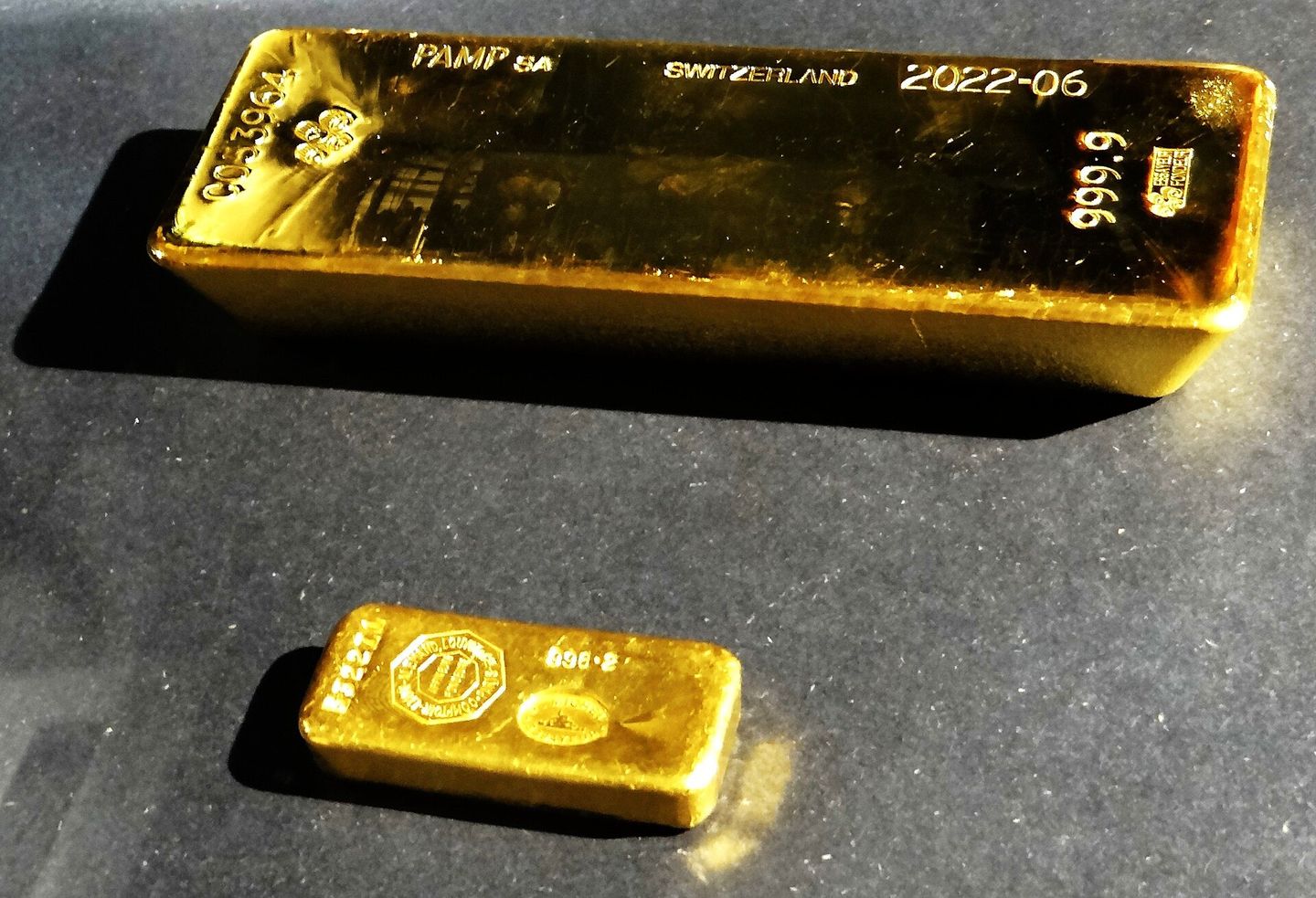
The Dollar's Reserve Share Falls As Central Banks Buy Gold
The Dollar Is Enforced, Not Chosen
A reserve currency whose issuer freezes the reserves is not a public good, and the holders have been answering in the only asset nobody else can switch off.
The dollar's role has always been sold as a service: deep markets, a neutral unit, a safe asset available to everyone on the same terms. Weaponising the payment rails, sanctioning at scale and freezing another central bank's reserves settled the question of whether that neutrality was ever real. It was a claim, it was tested, and it failed in public. What followed was not a stampede — it was the slow, sensible behaviour of institutions that had just watched the fire exit being welded shut.
Look at where the pressure is applied rather than at the aggregate. Washington has leaned on allies to take long-term Treasuries as a term of their security arrangements, which is a demand curve manufactured rather than observed. Unilateral financial enforcement, applied outside any multilateral framework, is what pushes whole blocs to build around Western legal and monetary institutions rather than inside them. The dollar's reach through American asset managers and multinationals turns a domestic interest-rate decision into an instrument of discipline over countries that had no vote in it.
A currency you may be prevented from spending is not an asset. It is a permission, and permissions get reviewed.
Venezuela is the case with the numbers attached. More than $13bn of oil has been sold under United States administration since 3 January 2026, and about $300m of it has been released to the government of the country that owns the oil. Officials sit over Iranian funds on the same principle. None of this is hidden or even much denied; it is simply not counted as part of the explanation when the reserve share is discussed as a portfolio choice.
The deeper point is older than the sanctions. Closing the gold window in 1971 removed the obligation to settle and replaced it with a Treasury-bill standard, under which the payments deficit is not a weakness to be corrected but the mechanism itself — foreign central banks recycle their surpluses into the debt of the state whose forces they are hedging against. The deficit of the 1960s was, to the dollar, entirely military. Creditors have been financing the thing that contains them ever since, and the move into gold is the first time in fifty years that a meaningful number of them have declined to.
The dollar's role has always been sold as a service: deep markets, a neutral unit of account, a safe asset available to everyone on the same terms. Weaponising the payment rails, sanctioning at a scale never before attempted in peacetime and freezing another central bank's reserves settled the question of whether that neutrality was ever real. It was a claim, it was tested, and it failed in public in front of every reserve manager on earth. What followed was not a stampede. It was the slow, sensible behaviour of institutions that had just watched the fire exit being welded shut.
Look at where the pressure is applied rather than at the aggregate, because the aggregate is designed not to show it. Washington has leaned on allies to take long-term Treasuries as a term of their security arrangements, which is a demand curve manufactured rather than observed. When the buyer of your debt is buying it because you are also the guarantor of its territorial existence, the price of that debt is not telling you what the market thinks. It is telling you what the arrangement requires.
Unilateral financial enforcement, applied outside any multilateral framework and lifted at nobody's schedule but Washington's, is what pushes whole blocs to build around Western legal and monetary institutions rather than inside them. And the reach runs deeper than the sanctions list: the dollar's transmission through American asset managers and multinationals turns a domestic interest-rate decision into an instrument of discipline over countries that had no vote in it. A rate rise in Washington is a fiscal crisis in a dozen capitals, and the capitals know it.
A currency you may be prevented from spending is not an asset. It is a permission, and permissions get reviewed.
Venezuela is the case with the numbers attached. More than $13bn of oil has been sold under United States administration since 3 January 2026, and about $300m of it has been released to the government of the country that owns the oil. Officials sit over Iranian funds on the same principle: the money exists, it is denominated in dollars, and whether its owner may touch it is an American administrative decision. None of this is hidden or even much denied. It is simply not counted as part of the explanation when the reserve share is discussed as a portfolio choice among fiduciaries.
The legal register makes the same point in colder language. Once the assets of a central bank can be immobilised by the executive of the issuing state, sovereignty over reserves is conditional rather than absolute, and it is conditional for every state that is not the issuer. That is a structural fact about the arrangement, not a description of any particular sanctions programme, and it does not go away when the programme is lifted.
The deepest point is older than any of the sanctions. Closing the gold window in 1971 removed the obligation to settle and replaced it with a Treasury-bill standard, under which the payments deficit is not a weakness to be corrected but the mechanism itself: foreign central banks recycle their surpluses into the debt of the state whose forces they are hedging against. The payments deficit of the 1960s was, to the dollar, entirely military. Creditors have been financing the thing that contains them ever since. Read that way, the move into gold is not a market view about inflation or a hedge against volatility. It is the first time in fifty years that a meaningful number of them have quietly declined to keep doing it.