Start with the count, because the count is what the framing is built to move past. The UN humanitarian office puts civilian deaths in Iran above three thousand four hundred, with more than thirty-three thousand injured. The Iranian human rights network HRANA counts 3,684 dead, of whom 1,721 were civilians. A single strike on a primary school in Minab killed at least a hundred and seventy-five people, most of them children.
More than a hundred international law scholars in the United States signed a letter this spring putting the objection in the plainest available terms. They wrote that they were "seriously concerned about strikes that have hit schools, health facilities, and homes," and that public statements by senior officials indicated an alarming disrespect for the rules of international humanitarian law. Nothing followed. There is no mechanism by which anything follows.
Every ledger in this war balances except the one kept in kitchens.
The economic campaign is aimed at a government and lands on a population, and the numbers say so. Iran's own statistical centre recorded year-on-year inflation of 88.6 per cent in the month to 21 June, and 108.1 per cent in rural areas. Meat and poultry rose about 178 per cent, bread and cereals about 139. The official minimum wage of 166.255 million rials is roughly eighty-five euros a month against a minimum household basket estimated at four hundred and fifty million: thirty-seven per cent of what it costs to live.
On the other side of the same ledger the war has been a revenue event. Brent crossed a hundred dollars in March and touched a hundred and twenty-six; it was still $89.53 in mid-August, about twenty-four per cent above where it stood when the bombing began. The administration has asked Congress for $1.5 trillion for the Pentagon in the coming fiscal year. Neither line is an accident of the fighting. Both are its business model.
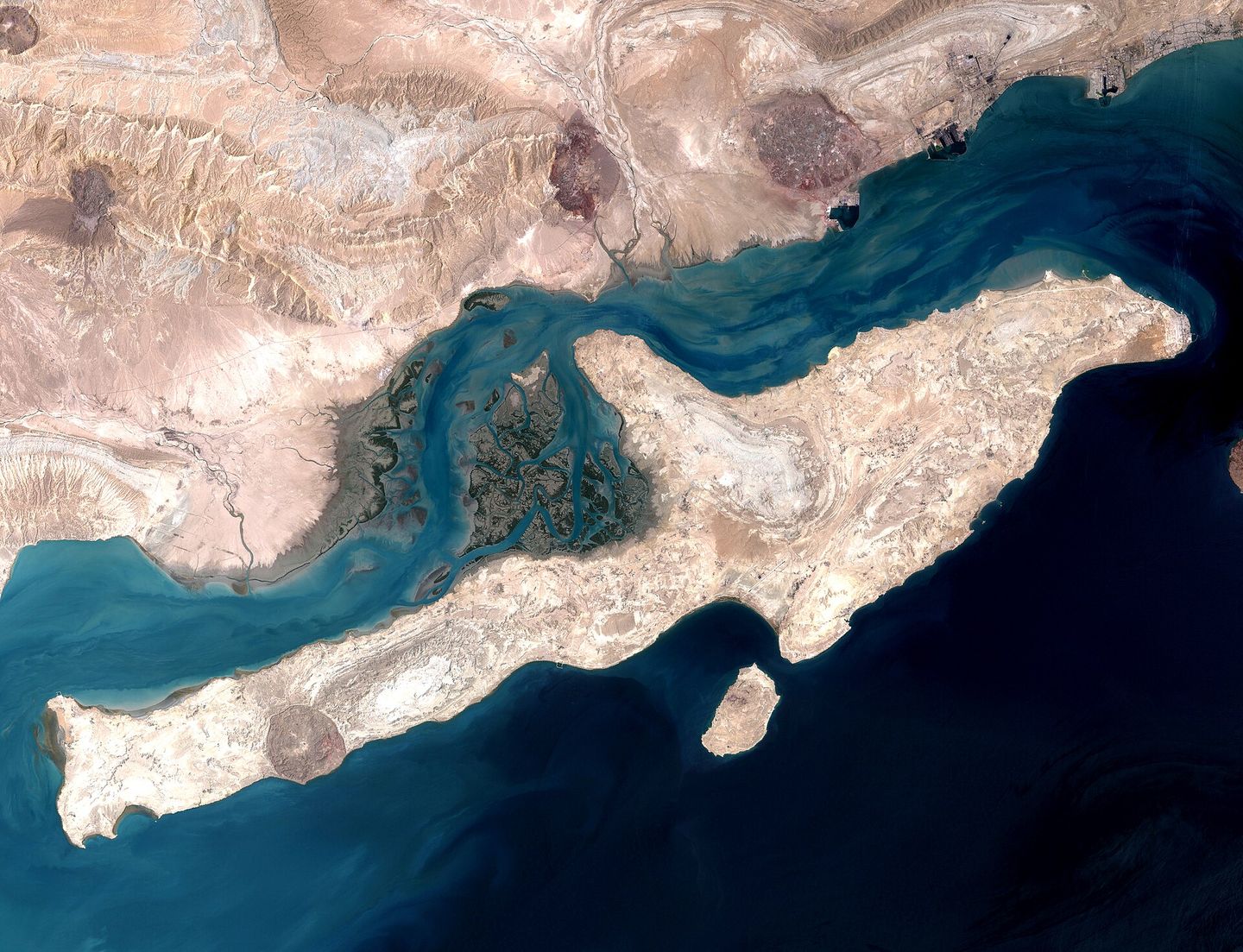
It is worth naming what the chokepoint actually is. Roughly twenty million barrels a day passed through that strait before February, about a fifth of the world's seaborne oil. An economy arranged so that one waterway can hold it hostage will keep producing states that fight over the waterway. This war is not a departure from how energy is organised. It is what that organisation looks like under stress, and every party to the negotiation now under way accepts that premise without argument.
None of this is a brief for the government in Tehran, which is not owed one, and which has answered its own citizens' grievances with prisons for a generation. But the people who were bombed and the people who are governed are the same people, and six months of bombing did not separate them. No uprising materialised. What materialised was a queue for a fifty-litre fuel ration.
A corridor through the strait and an accounting of the enriched stockpile are both worth having, and both are being negotiated as though they were the whole subject. They are not. Nobody in Minab, in Tehran, or in the American towns that supplied the 757 wounded was asked whether this was worth doing, and the institutions that could have asked — a Congress that never authorised it, a Security Council that never voted it — were routed around by design. That is the part that will outlast the ceasefire, whenever one is signed.