There is a respectable left case against this Union, and Iceland has made it for thirty years. The Left-Green Movement has opposed membership on the grounds that the treaties constitutionalise a market and leave environmental ambition to the market's convenience. There is a stronger version still: in 2008 Iceland had its own currency, let its banks fail, imposed capital controls and prosecuted bankers. Ireland and Greece, inside the euro, were handed the bill and told it was arithmetic. Nobody on the left should want that lesson unlearned.
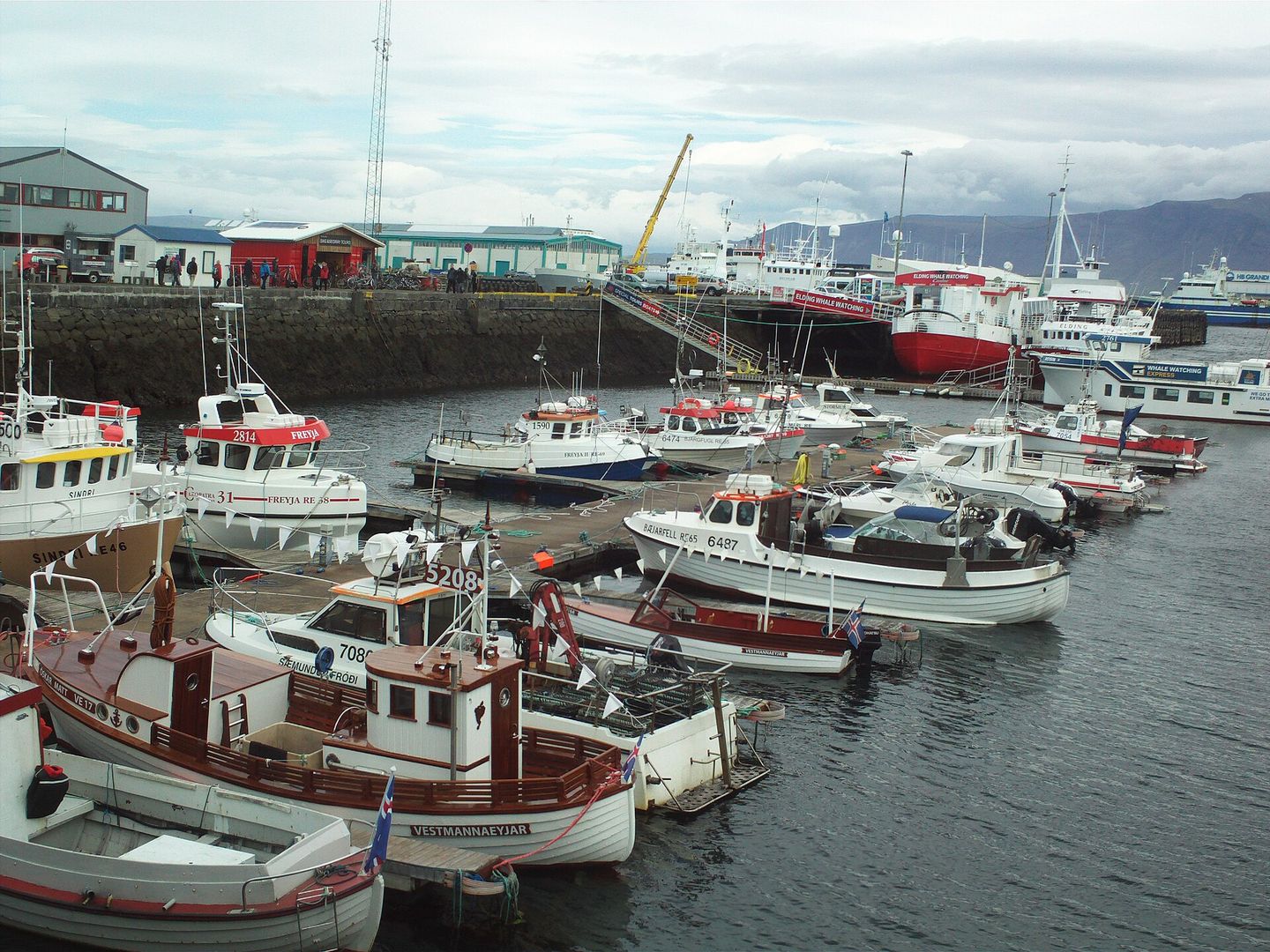
But look at who won this referendum, and with what. The decisive bloc was the fishing industry, 90 per cent of it opposed, and the thing it was defending was not a coastline. It was a register. Iceland's transferable quota system converted a public resource into a tradeable asset, and the asset concentrated, as tradeable assets do, in a handful of firms the country calls the quota kings. A fisherman told a reporter this month that the system has worked economically and that socially it has been a disaster. Both halves of that sentence are true, and only one of them was on the ballot.
So the villages of the Northwest voted 63 per cent against Brussels to protect a quota that the Northwest does not hold. The waters remain Icelandic. They remain, more precisely, the property of the people who were already holding them on Friday, now insured against the one authority large enough to have asked awkward questions about how they got them.
Sovereignty is a real thing and worth defending. The question is always the same one, and it was never put: sovereignty exercised by whom, over whose property, at whose expense.
Watch how the industry's interest became the national interest without anyone having to argue for it. Fisheries Iceland speaks for the holders of the quota; it does not speak for the crews, the processing towns, or the young skipper who cannot buy in. Yet the phrase that carried the campaign was our fishing waters, and the possessive did an enormous amount of work. A sectoral lobby with a specific asset to protect was heard, correctly and without challenge, as the voice of the country that owns the sea it fishes.
The counterfactual matters, and the left owes itself an honest one. Under the Common Fisheries Policy the quota would have been allocated substantially on historical fishing patterns, and no foreign fleet has worked those grounds in decades — so Iceland would in practice have kept the catch. What it would have lost is the power to set the rules alone, and what it would have gained is an external authority with both a reason and a right to ask why a public resource sits in nine families' hands. That is the trade nobody described out loud.
It is not an argument for Brussels. The Common Fisheries Policy has presided over its own concentration and its own emptied harbours, and a left that pretends otherwise is selling something. It is an argument about what was and was not on the ballot: two regimes for regulating the catch were debated for four months, and the question of who owns it was raised by neither side.
The Yes campaign has no standing to make this point, having spent the summer talking about mortgage rates and chapter closures rather than about ownership. And so the result stands as a genuine expression of what a majority wanted, achieved by a campaign that never had to defend the thing it was really defending. That question has now been postponed for another parliament, which is to say for as long as the people holding the quota can manage it.