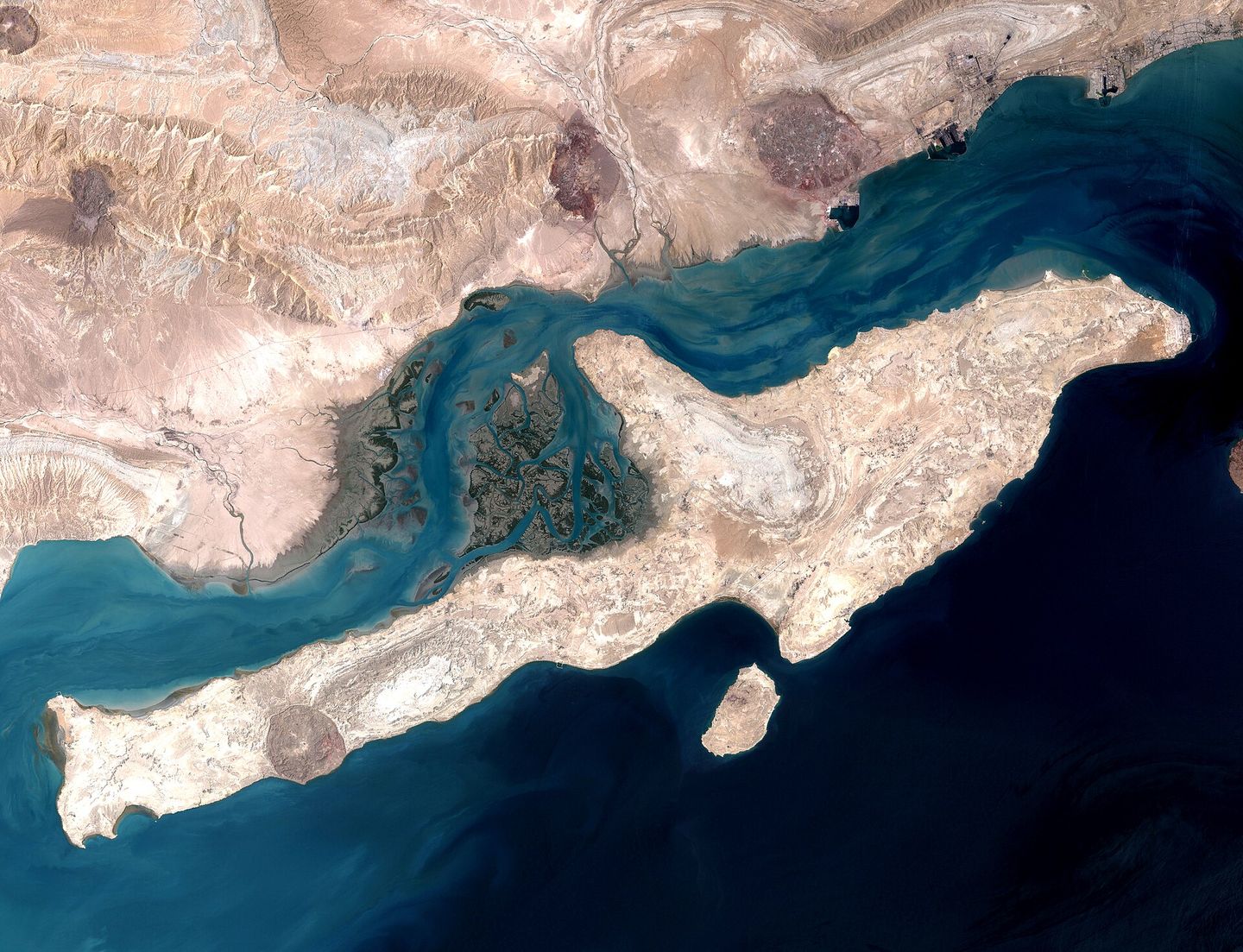
On 26 August Iran and Oman announced agreement on a temporary shipping route through the Strait of Hormuz: a corridor seven miles wide, entered through Iranian territorial waters, with part of the exit through Iranian waters too, and a joint project to clear the mines Iran laid. A Revolutionary Guard spokesman described the regime it establishes without embarrassment — vessels under Iranian surveillance before entry, permitted to pass only if Iran grants permission. Before the war about a hundred and thirty ships a day made that passage. In the second week of August the figure was ten.
For four decades that passage required nobody's consent. The president has been blunt about the money: "I'm not going to let them charge." But the fees are the small half of this. A toll can be refused, renegotiated or absorbed. A permission cannot, because the party that grants it can withhold it, and every charterer, underwriter and refinery in the world will now price the chance that it is withheld again.
Freedom of navigation is not a lane you are granted. It is a lane nobody has to grant you.
Pressure has in fact been working, which is the case for not abandoning it three weeks early. The naval blockade of Iranian ports has turned vessels away in the dozens — ninety-four by late May in its first phase, fifty-five more since it resumed in July. Iranian seaborne exports fell to a fraction of their pre-war level. The rial has gone through two million to the dollar. A state under that arithmetic signs. A state handed a corridor first does not.
The nuclear file meanwhile stands exactly where it stood. Nothing has been verified since June 2025, when the agency last counted 440.9 kilograms of sixty per cent material along with 184.1 kilograms at twenty. Any settlement that reopens the strait while leaving that quantity unaccounted for has bought a pause and called it a solution, and the pause will be measured in the time it takes to rebuild one cascade hall.
The reply from the other side is serious and deserves answering: ten ships a day is not a hundred and thirty, and a corridor beats a closed strait for everyone who buys fuel. True. The difficulty is that temporary arrangements in this region are ratified by use. A route entered at Tehran's discretion, sailed for a year, becomes the baseline the next negotiation starts from, and the next demand will not be about mine-clearing.
Consider who else is watching. The Gulf states that opposed this war in February changed position the day their own territory was hit in March, and they are the ones exposed if American guarantees turn out to be conditional. Deterrence is a regional public good: expensive to buy, cheap to spend, and impossible to repurchase at the old price once a client has watched it lapse.
The terms worth signing are not maximalist. Transit that requires no permission and no notification; inspectors inside the damaged sites; a verified accounting of the enriched stockpile. Everything short of that is a ceasefire that dates itself. The question is not whether this administration wants the war over, because everyone does, but whether it will make the last three weeks of pressure count for more than the first six months did. A war ended on the adversary's terms is not peace. It is the interval before the sequel, priced in advance.