The map has barely moved this year and the casualty column has never risen faster. The UN human rights monitoring mission verified 1,396 civilians killed and 7,978 injured in the first six months of 2026 — up 37 per cent on the same period of 2025 and 114 per cent on 2024. June alone produced 293 dead and 1,990 wounded, the worst month since April 2022. A stalled front is not a quiet one, and the two facts are not in tension: they are the same fact seen from different instruments.
The explanation is in the weapons rather than the geography. Casualties from long-range missiles and drones rose 60 per cent year on year, and in June they accounted for 45 per cent of the total. Short-range drones near the line killed 89 civilians and injured 588 in that month, the highest such figure recorded. The fighting has stopped advancing and started reaching.
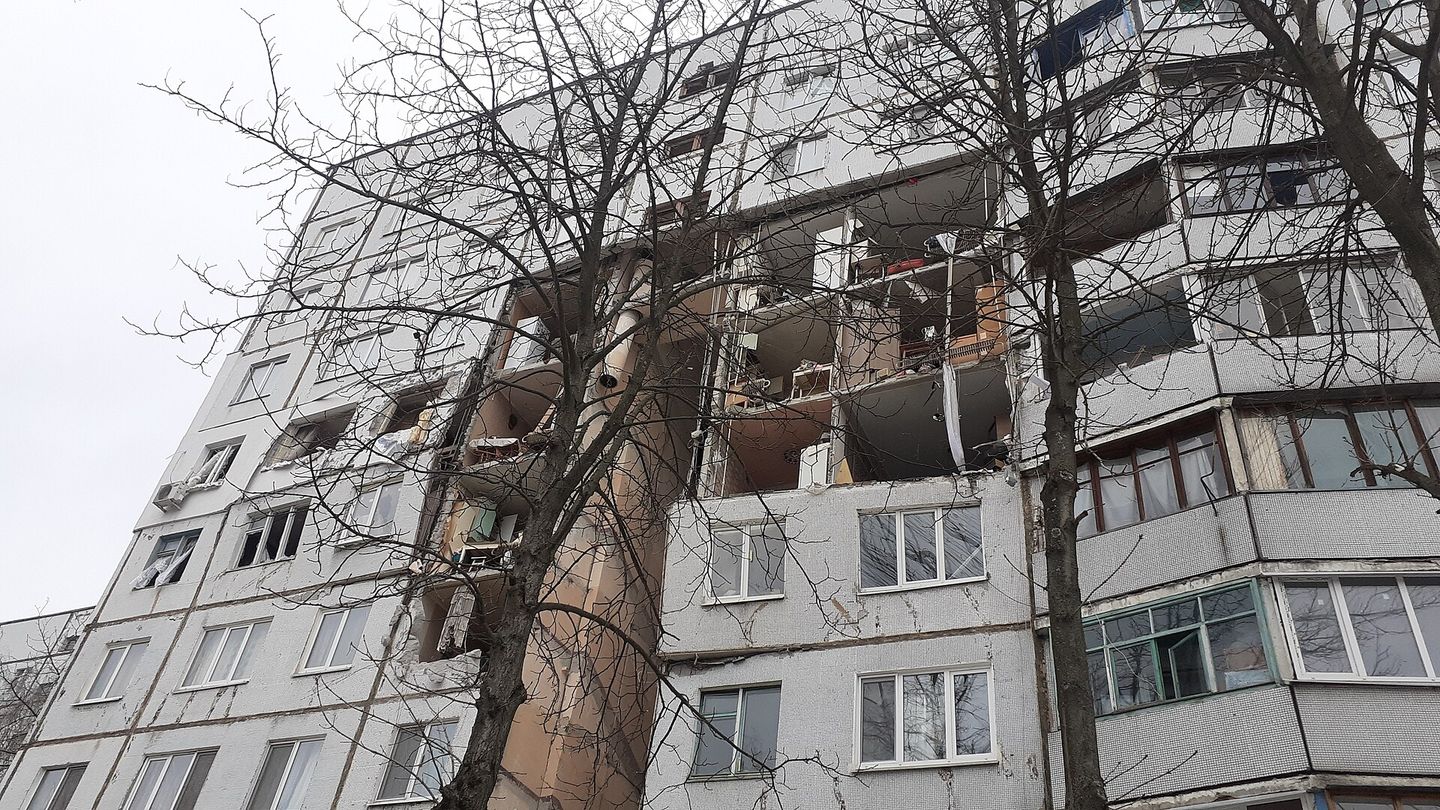
That is the war. The peace already has a price. The fifth joint assessment by the Ukrainian government, the World Bank, the European Commission and the United Nations, published in February, put reconstruction and recovery at almost $588 billion over a decade against direct damage of more than $195 billion. Fourteen per cent of the housing stock is damaged or destroyed, which is more than three million households.
Somebody will pay for this. The only question still open is whether the invoice goes to the state that caused the damage or to the taxpayers who opposed it.
Europe has so far answered that question by declining to answer it. In December its leaders agreed a €90 billion interest-free loan for 2026 and 2027, raised on the capital markets against the EU budget, rather than lend against the roughly €210 billion of Russian sovereign assets immobilised in the Union — some €185 billion of it in Belgium, whose government objects that a court could one day order compensation and that a clearing house is not a thing to experiment on.
The Belgian caution is not frivolous. But it is procedural, and procedural objections have procedural answers: indemnities, joint and several liability, a statutory basis agreed by all twenty-seven rather than improvised by one. What cannot be defended is the present arrangement, in which the legal risk of billing the aggressor is judged intolerable while the fiscal risk of borrowing instead is quietly socialised across the same twenty-seven.
The other half of the problem is that a settlement is not a document. Tatiana Stanovaya of the Carnegie Russia Eurasia Center argues that Moscow's demands run well past territory into Ukraine's internal politics, and that a text signed under pressure would not survive contact with either society. She locates the obstacle precisely: “The main source of Russian aggression is a profound mistrust of the West”, and a belief about what the West intends by it.
So the honest agenda is duller than either the weapons argument or the peace argument. Fund Ukraine's deficit on a schedule its finance ministry can plan against. Settle the legal basis for the reserves before the political moment for it expires. Open the accession chapters that are ready to open. Build the audit that lets $588 billion survive the journey from pledge to poured concrete. None of it is photogenic; all of it is the difference between a peace and an interval.