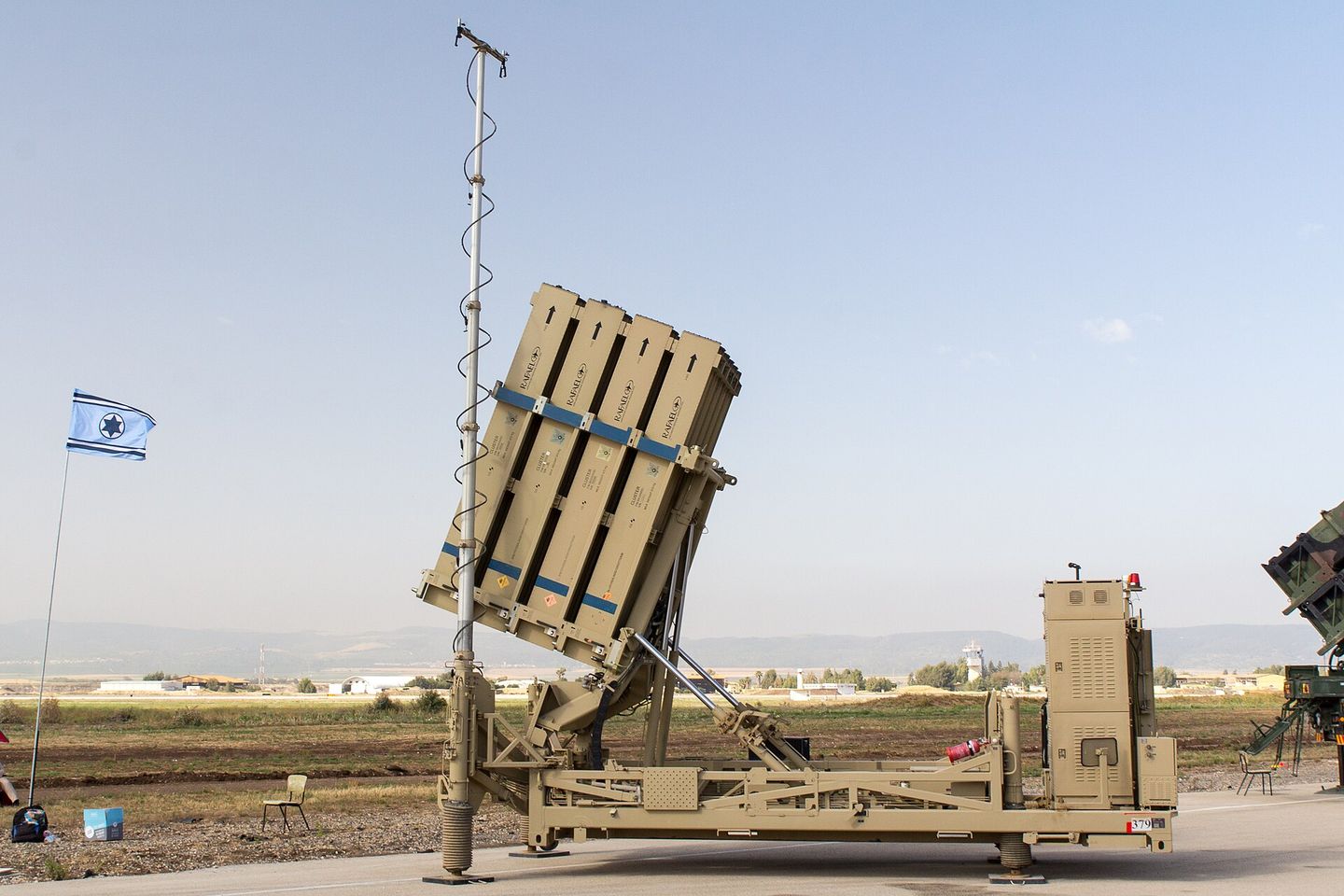
The provision to read is Section 224 of the National Defense Authorization Act, later renumbered 219, which establishes a United States–Israel Defense Technology Cooperation Initiative and directs the defence secretary to name a Pentagon executive agent to coordinate and expand it. Annelle Sheline of the Quincy Institute noted the plain oddity of the thing: “No other foreign country has an executive agent in the Pentagon to integrate our military industrial complex with theirs.”
Understand what that changes. The existing arrangement is a ten-year memorandum worth $38 billion, an appropriation Congress can debate, trim or refuse every year. Industrial integration is not an appropriation. It is a set of joint production lines, shared standards and embedded programmes, and once they exist the annual vote becomes theatre. As Sheline put it: “If we proceed with defense industrial integration (Section 219), congress won't be able to vote on it again.”
The complaint is not that America helps an ally. It is that the help is being welded into the hull, where no future Congress can reach it.
This is a hierarchy question, not an affection question, and the clearest statement of it came from someone arguing for the alliance. Writing in March, Chart Westcott set the terms out: “The United States is the senior partner. Israel is the junior partner. This is not a statement of preference. It is a statement of fact.” A junior partner aligns with the strategic direction of the senior partner. Conditional aid and operational coordination tied to American objectives, yes. Automatic commitments, no.
Judged against that standard, the past year reads badly. Washington entered a war with Iran in February that ran forty days before a ceasefire. Joe Kent, who ran the National Counterterrorism Center through 2026, put the bill to American taxpayers at some $50 billion, and stated his objection in one line: “We cannot outsource components of our national security to nations that do not share our interests.” On the technology itself he was blunter still: “back doors and spyware can be installed that will most certainly be used by the Israelis to influence U.S. policy.”
The vote is the tell. When an amendment to strip the provision reached the House Armed Services Committee in June, it failed on a voice vote with two members recorded in favour. Ben Freeman of the Quincy Institute observed that “this unprecedented level of US-Israeli military integration stands in stark contrast to the traditional aid model of defense cooperation.” A committee that will not hold a recorded vote on a permanent commitment is telling you what it expects the recorded vote to show.
The coalition against it does not run along the usual line, which is the second tell. Ro Khanna, no man of the right, gave the argument in a register any America First voter would recognise: “The American people are tired of the arrogance and insolence of Prime Minister Netanyahu telling America what we should do.” And: “I am for Team America. I am for the interests of this country.”
None of this requires believing Israel is an enemy or that the intelligence relationship is worthless. It requires believing that a superpower sets terms rather than receiving them, that commitments which cannot be revisited are not commitments but annexations of policy, and that the country paying should be the country deciding. That used to be uncontroversial. It is worth making uncontroversial again.